In the era of Trump, you can’t help but feel a bit like Bruno Latour ending up having to defend climate change against the argument that it’s all socially constructed. Today the media report that the US Environmental Protection Agency has suspended use of a dollar value on a statistical life in its pollution cases. I remember way back when this was first introduced, making the same objection: You can’t give human life a price!
No, I am not now, nor was I anachronistically then, in the camp of Trumplethinskin and his dwarves.
Of course, I can appeal to all the standard defenses: It was commodification we were objecting to, Trump’s real reasons for the reversal are venal and punitive, it’s better to keep to a flawed practice than go without it, etc. etc. But it was always—is still always—the case that the burden of coming up with better appraisal techniques, and one that did not ride on the dollar value of a statistical life foregone, was on those of us who objected.
If the EPA goes ahead with this, it’s our duty of care to have better alternatives head.
The most telling feature of present-day crisis thinking is that it’s doubled. Not only are we said to be at the crossroads of so many dire consequences (think Woody Allen’s quip: “More than any other time in history, mankind faces a crossroads. One path leads to despair and utter hopelessness. The other to total extinction. Let us pray we have the wisdom to choose correctly”). But it’s worse than that.
We’re also temporizing while in the crossroads. We’re deluding ourselves with getting by, coping, delaying and waiting. As if the longer we can suspend choice, the greater chance the crossroads will go away. As if these were only rumors to be waited out.
So whether we find ourselves at the last set, but always increasing number, of crossroads or procrastinating with no real escape route. The polycrisis of interconnected crises–that singular noun for multiple phenomena–is fast becoming its own plural, polycrises.
To summarize and recast, our problem is not only crisis-thinking but also its hackneyed metaphors–all those crossroads, all that tarrying while Rome burns, really?
To puncture this thinking requires you to ask: But what about the accomplishments of real people, in real time, with real problems? Do they—both the people and the accomplishments—count for little or zilch, even when terms like “progress” and “success” are no longer as useful? What do we do with the developmentfact that accomplishing things means less about “keep on going” than it is does about “this is what we have nevertheless done, even with setbacks, when it matters most”?
When people improvise in order to accomplish, then reducing that to coping and the sub-par seems to me one crisis too many. Boris Pasternak, the Russian poet and novelist, is reported to have said that life creates events to distract our current attention away from it, so that we can get on with work that cannot be accomplished any other way.
II
So what?
Pose questions that offer up new metaphors on the principle that to change reality is at least to change the metaphors that last. Roberto Schwartz, the great Brazilian literary critic, recently described a play of his that tried to interrogate the certainties and contradictions in popular culture:
The problems are numerous: are cultural niches and racial quotas tantamount to prisons? Does a samba school band deserve the Nobel Prize? Is poverty picturesque, shameful, a solvable problem, a crucial world issue? The favela: rather than backward, don’t we all know that it’s the future of humanity? What are its teachings? Is popular culture revolutionary? Is individual success a betrayal? Does the favelado artist compete with contemporary art on an equal footing? Does it compete with him? The proliferation of questions and the critical freedom to confront them don’t guarantee a solution, but they bring fresh air and enjoyment.
Now we wouldn’t typically notice the accomplishments of “fresh air” and “enjoyment” while in the multiple crossroads of planetary polycrises.
But—and this is the thought experiment—if Schwartz’s questions are the ones we could be asking not only in Brazil but also everywhere, then the analyses of everywhere else is, importantly, with respect to samba school bands, the favela, and individual success as betrayal of collective efforts to address poverty variously defined. My wager is that out of these comparisons emerge not only new questions that defamiliarize both what is considered intractable in some places and terms like success/failure, which it turn out don’t get us far enough in a world where failure is not empty of accomplishments and success is not empty of setbacks.
Ecologists have for years studied social-ecological systems, like ecosystems and landscapes; at the same time organization theorists have investigated socio-technical systems, like electricity grids and other critical infrastructures. Because some of the latter are grounded in some of the former (think watersheds and hydro-power), it’s not surprising that conceptual understanding in these different disciplines overlap. In particular, it’s a fairly easy matter to find each highlighting social complexity and system interconnectivities (see Sources for a sample).
What is more surprising, in my view, are key differences, “key” in the sense that their respective policy and management implications differ so. I know far more about critical infrastructures than I do about ecosystems, but I have published about the latter and continue to read relevant literature. What follows are, I believe, well-informed observations, but I welcome correction of these opinions.
Finally, the two major differences identified should not be interpreted as challenging or disparageing the huge overlap between the social-ecological and socio-technical literatures with which I am familiar. A focus on overlaps and their implications for policy and management awaits a longer venue.
II
Ecologists frequently talk about tipping points in systems that have not been (or could not be) managed properly. The human-dominated ecosystem flips from one state into another (and anyone who doubts this is happening hasn’t been following the climate emergency). The new state can and often looks little like the immediately preceding one.
It is also common to talk about large critical infrastructures (again, think of large water supplies) “flipping into systemwide failure,” where operations during systemwide failure look nothing like “normal” that preceded it. But organization theorists are just as interested in the drift of operators away from shared situational awareness and common operating picture of their system that may precipitate outright failure later on. I do not know of any comparable ecological literature on real-time ecologists, e.g., working in the field on ecological restoration or ecosystem design projects, who drift over time from better practices identified across a run of diverse cases in their respective fields.
That focus on real time also differs between the social-ecological and socio-technical. The difference ironically stems from a common assumption shared by both: namely, the respective systems are no longer (if they ever were) stationary: They are dynamic and fast changing. Some ecologists take the lesson to be that the options horizon is necessarily the longer term over which to be more adaptable and flexible. Some organization theorists, in contrast, take the lesson to be that if you can manage more reliably and safely in real time, right now when it matters, why believe those who say they can do better over the longer-term? Again, there may be a track record about which I do not know of staff and consulting ecologists who have been brought into infrastructure control rooms or their immediate wraparound support units in order to provide real-time advice.
III
So what?
It’s inconceivable to me that the two different approaches, each of which share common assumptions about really-existing complexity and interdependencies and each of which promotes interdisciplinary research and boundary work, don’t collaborate more. It is no longer useful for ecologists to refer to critical infrastructures as “engineered” systems when manifestly they are socio-technical throughout and where that “socio” continues to considerably overlap with the “social” in social-ecological.
Nor is it useful for organization theorists to ignore that the mandate of critical infrastructures is to square as much of the circle of service reliability and ecological restoration, at least in real time. And given the priority both disciplines assign to variation and diversity—called requisite variety in organization theory and response diversity in ecology—you’d expect far more cross-references than I have found to date.
So too would you think that given the shared emphasis on “transformation”—long-term regime transformation from the ecological side, real-time transformation of high input variability into low and stable output from the organizational side—there would be more interchange, especially when the center of analytic and normative attention shifts to capacious (essentially contested?) concepts like “governance,” as it now often does in both approaches.
Sources.
Allen, C. R., A. Garmestani, T. Eason, D. G. Angeler, W. Chuang, J. H. Garcia, L. Gunderson, and C. Folke (2025). “Disastrous consequences: shortcomings of resiliency strategies for coping with accelerating environmental change.” Ecology and Society 30(4):21. https://doi.org/10.5751/ES-16668-300421
Ashby, R, (1952). Design for a Brain. Chapman and Hall, London.
Langston, J. D., A. Sanders, R. A. Riggs, S. A. Afiff, R. Astuti, A. K. Boedhihartono, S. Chakori, B. Dwisatrio, C. Griffin, N. J. Grigg, H. Kurniasih, C. Margules, J. F. McCarthy, D. S. Mendham, C. Múnera-Roldán, R. D. Prasti Harianson, J. A. Sayer, D. Susilawati, M. van Noordwijk, and S. M. Whitten (2025). “Landscape transition science: relational praxis for continuous learning.” Ecology and Society 30(4):53. https://doi.org/10.5751/ES-16725-300453
Pettersen, K., and P. Schulman (2016). “Drift, adaptation, resilience and reliability: Toward an empirical clarification.” Safety Science 117: 2–9.
Roe, E. (2023). When Complex is as Simple as it Gets: Guide for Recasting Policy and Management in the Anthropocene. IDS Working Paper 589, Brighton: Institute of Development Studies, DOI: 10.19088/IDS.2023.025
Roe, E., and P. Schulman (2008). High Reliability Management: Operating on the Edge. Stanford: Stanford University Press.
————————————– (2016). Reliability and Risk. Stanford University Press, Stanford CA.
Roe, E., and Michel J.G. van Eeten (2001). “Threshold-Based Resource Management: A Framework for Comprehensive Ecosystem Management.” Environmental Management 27 (2).
—————————————————— (2002) “Reconciling Ecosystem Rehabilitation and Service Reliability Mandates in Large Technical Systems: Findings and Implications of Three Major US Ecosystem Management Initiatives for Managing Human-Dominated Aquatic–Terrestrial Ecosystems” Ecosystems, 5 (6): 509–528.
Schick, E., M. Döring, J. Knieling, B. M. W. Ratter, J. Pein, and K. Dähnke (2025). “Turning the tide in estuary governance through collaboration? A systematic review, meta-synthesis, and conceptual framework.” Ecology and Society 30(4):6. https://doi.org/10.5751/ES-16321-300406
van Eeten, M. J. G., and E. Roe (2002). Ecology, Engineering and Management: Reconciling Ecological Rehabilitation and Service Reliability. New York: Oxford University Press.
Walker, B., A.-S. Crepin, M. Nyström, J. M. Anderies, E. Andersson, T. Elmqvist, C. Queiroz, S. Barrett, E. Bennett, J. C.Cardenas, S. R. Carpenter, F. S. Chapin III, A. de Zeeuw, J. Fischer, C. Folke, S. Levin, K. Nyborg, S. Polasky, K. Segerson, K. Seto, M. Scheffer, J. F. Shogren, A. Tavoni, J. van den Bergh, E. U. Weber, and J. R. Vincent. (2023). “Response diversity as a sustainability strategy.” Nature Sustainability 6:621-629. https://doi.org/10.1038/s41893-022-01048-7
Weick, K, (1995). Sensemaking in Organizations. Sage, Thousand Oaks CA.
If I am reading historians Istvan Hont and Michael Sonenscher correctly, 18th century thinkers wrestled again and again with the constitutional means for reining in the bad-side of public debt (e.g., rulers use the monies for war), while promoting the good-side (e.g., rulers build the infrastructure Adam Smith himself saw necessary for human betterment).
Today, what to do about the public debt is even further from settked. Constitutional proposals to ensure balanced budgets have come and gone; actual constitutional amendments, e.g. Germany’s restricting budget deficits to no greater than a certain percent of GDP, are suspended or circumvented. Green golden rules are proposed today that “would exclude any increase in net green public investment from the fiscal indicators used to measure compliance with fiscal rules,” recognizing however that “by allowing green spending to be financed by borrowing. . .could undermine public debt sustainability”. Etc. Etc.
In fact, nations now divide into two with respect to public debt: those that kick their public debt bucket down the road and those finding it more and more difficult to do so. ““This idea that we can continue to kick the can down the road” is no longer tenable,” [an expert recently put it about this debt]. “That horizon is coming very much closer to us.”” Even closer when you add the increasing pressure on governments to pick up private-sector pension commitments that can’t be met.
What to do?
II
One answer is to rethink the public debt beyond “it’s our investment in the future.” Not that the latter isn’t true, but rather its truth-value and contexts need to be pushed further if we are to render the currently intractable debt more tractable.
How? For starters, think of public debts like keystone ecosystems, the way groundwater systems are central to other dependent terrestrial and aquatic ecosystems. Or that public debts are the infrastructures experienced as the social property of the propertyless, who know best when and how to depreciate their assets. If the public debt is our ruination, then we have to push that point further to how public debts are experienced, here and now.
III
This experience of public debt in real time is the perfect place to start reframing. Begin with the 2020 Zambia government default:
Zambia defaulted on interest payments to some of its private lenders in November 2020 when private creditors refused to suspend debt payments. In February 2021, Zambia applied for a debt restructuring through the Common Framework, but little progress has been made on the negotiations as large private creditors, such as BlackRock, have so far refused to reach an agreement on debt relief.
BlackRock, headed up by Larry Fink, is the largest of a number of bondholders who are refusing to cancel Zambia’s debt, despite lending to the country with interest rates as high as 9% (in comparison to wealthy countries like Germany, UK and USA who were given loans at 0-2% interest in the same time period) potentially making huge profits. Debt Justice estimates that BlackRock could make up to 110% profit if repaid in full.
Meanwhile, Zambia is experiencing devastating impacts of the climate crisis such as flooding, extreme temperatures and droughts, which are causing significant disruption to livelihoods and severe food insecurity. Unsustainable debt levels mean the country lacks many of the resources required to address these impacts. This decade, Zambia is due to spend over four times more on debt payments than on addressing the impacts of the climate crisis.
It should be noted that compared to BlackRock, only two nations, the USA and PRC, have GDPs greater than the wealth managed by BlackRock (whose recent assets are reported to be well over $10 trillion). It’s also reported that the ten largest asset-management firms together manage some $44 trillion, roughly equivalent to the annual GDPs of the USA, PRC, Japan and Germany.
That said, yes of course, we still must say that this and other current sovereign debt crises could be better managed. Fair enough.
But it would be more accurate to say that BlackRock is actually being managed in ways the sovereign debt crisis can’t, i.e., BlackRock has a C-suite nations don’t have. Why then not start with BlackRock as the catalyst for better management? (After all, it rose to an undisputed shareholder superpower only after the last financial crisis of 2008.)
Or from the other direction, think of BlackRock as the global financial crisis underway and the “sovereign debt crisis” as the smoke-and-mirrors to get the rest of us to believe otherwise. We know exactly who benefits from placing the blame on the Government of Zambia’s fiscal and monetary management, when the global behemoth BlackRock is managed even worse in terms of self-interest.
IV
Consider another example of how to reframe the public debt (or at least the experience of that debt): off-budget items as a way of funding that can’t be financed through public debt:
The EU cannot finance its budget through debt, but the EU Treaties do not prohibit the issuance of EU-27-backed securities or bonds for off-budget operations, as long as they are approved by the Council. The largest collective borrowing operation in EU history so far was the temporary Covid-19 recovery program NextGenerationEU (NGEU), which received 90 per cent of its financing through the Recovery and Resilience Fund (RRF) for which the European Commission borrowed €807 billion on behalf of the EU-27 by issuing green bonds. NGEU presents itself as a green industrial investment program for the benefit of future generations, but it is pervaded by a fundamental contradiction: the repayment involves an intergenerational debt transfer, burdening future generations with €30 billion in annual debt servicing , starting in 2028 and ending in 2058.
Angela Wigger (2025). “Behind InvestEU’s Trojan Logic: Public Guarantees, Private Gains, and the Illusion of Climate Action,” accessed online at https://www.nl/behind-investeus-trojan-logic/
Here focus on the bolded terms: off-budget operations and intergenerational debt transfer.
Once upon a time, the basic idea of a budget was to be comprehensive. There’s nothing “off-budget” if the objective is constrained maximization of system benefits net of expenses. Of course, that hasn’t stopped all manner of moves to sequester below-line expenses as if they weren’t subject to budget constraints:
Technocrats’ creative reinterpretation of their own authority and governments’ creative fiscal accounting via off-budget financing vehicles can improve fiscal-monetary coordination and create significant fiscal space (van ’t Klooster, 2022; Guter-Sandu and Murau, 2022). However, the hidden and interim nature of these solutions preempts. . .
Article titles, like “The Eurozone’s Evolving Fiscal Ecosystem: Mitigating Fiscal Discipline by Governing Through Off-Balance-Sheet Fiscal Agencies,” give the game away.
Nor does the increasingly out-of-date riposte work, namely: Future generations will have more income than we to cover these debts, invisible or otherwise. We’re in times of decreasing per-capita incomes and near-zero discount rates, where the generations ahead are to be treated just as alive as we are. Note also that if you agree, then the wider declension narratives at work—apocalypse, catastrophe, polycrisis—undermine the very persistence of concepts, like government budgets, intergenerational debt and “future generations.”
So, again, what’s to be done? Again, reframe. What life-worlds already exist that do not rely on these terms, budgets, debt and generations; apocalypse, catastrophe and polycrisis? That is, in addition to the always-on search for alternative social movements, we are looking for those breaches in political economies and heterogeneities that displace, re-situate or unaccent the terms that now leave us nowhere else to go.
V
“Breaches and heterogeneities”? That level of analysis requires us to be more granular than appeal to abstract levels of this or that political economy. For example, it’s not varieties of capitalism (or anti-capitalism for that matter) we are looking for but rather specific hybrids and subsystems. Let’s take the example of free ports as illustrative.
The instance of free ports would seem to take us right back to the heart of capitalism, with its Special Economic Zones (SEZ) and such. But we would be wrong. The authors of a recent global study of free ports, Koen Stapelbroek and Corey Tazzara (2023), stress their own version of “off-balance sheet”. “Free ports offered essential services that the prevailing system of political economy scarcely allowed.” More specifically:
Rather than treating free ports as intrinsically liberal or illiberal, it is better to see them as controlled breaches in the prevailing political economy, whether that be of a state or of an entire trading system. With respect to national political economy the breach is obvious, since by definition a free port policy entailed a relaxation of ordinary controls over trade and often other parameters such as immigration. The extent of control varied for reasons ranging from technology to the fiscal trade-offs unavoidable in any customs policy. The underlying strategy varied, too – in some cases, free ports served to stabilise a state’s political economy (as in Genoa), in other cases as a forerunner to transform the interior economy (as in the Caribbean). The free port shows that the modern state has never endorsed homogeneous space: there have always been breaches, sometimes of great importance.
Koen Stapelbroek & Corey Tazzara (2023) The Global History of the Free Port, Global Intellectual History, 8:6, 661-699, DOI: 10.1080/23801883.2023.2280091
So what? What does this mean practically?
Consider a familiar recommendation: “Suspend and cancel debt payments when a climate extreme event takes place, so countries have the resources they need for emergency response and reconstruction without going into more debt.” This statement has no semantic meaning for really-existing policy and management in the absence of drawing conclusions from the run of diverse cases of “extreme events,” including but not limited to equally granular cases of free ports.
We know that central notions of market clearing prices, opportunity costs and economic incentives have serious limitations in the areas of pastoralist development, e.g., water provision, health and humanitarian aid. Nor are such limitations news to economists working in other substantive areas of high uncertainty and complexity in policy and management.
Fortunately, the notion of pastoralist systems as critical infrastructure and (some) pastoralists in these systems as reliability professionals is associated with its own kind of economics, termed here “reliability-seeking economics.”
II
This economics tells us that in addition to household livelihoods and community well-being, we should focus on the foundational economies in the pastoralist areas of interest; that these local and regional economies rest on formal government infrastructures for water, transportation, and other services—actually often the absence of said structures—but also include far less visible infrastructures especially important for local and real-time transactions (e.g., bush livestock markets, local security arrangements, seasonal and fallback water points); that these transactions and economies necessarily tailor higher-level government and NGO concerns about risks, trade-offs and priorities (local views about drought differ so often from those of outsiders); that this tailoring occurs at more granular levels than terms like “adaptable” and “flexible” convey in formal mission statements and administrative protocols of government and the donors; that these more granular levels also make visible what the vast majority of pastoralists will not trade-off in real time (forgoing, forever, livestock and grazing/browsing); and that recognizing all this is one very major way of building up and extending the economic expertise of government and donor professionals in pastoralist development well beyond a necessary “taking traditional knowledge into account.”
III
Much more can be said and recommended, but for the reasoning behind the preceding paragraph and an explanation of key terms, please see the broader rethinking of economics in light of critical infrastructures and high reliability in
Then take less than 10 minutes and listen an inadvertently prescient Walt Disney in the opera, The Great American, by Philip Glass (starting at minute ~35.00 and ending minute ~41.30):
I come from a profession, US policy analysis and public management, that was premised from the get-go on being interdisciplinary: not just some training in economics, but also in law, research methods and political science, among others. So, economics has always had heterodox contexts for many of us.
Over my career, economics has come under a great deal of criticism. Some economists have offered fixes and their heterodox alternatives. Below is an alternative reading of economics across nine topics from a policy analysis perspective that has never been economics alone and which seeks greater policy and management relevance in being so.
1. Rethinking opportunity costs
2. “Given market-clearing prices. . .”
3. The chop-logic of risks, trade-offs and priorities
4. Another way to put #3 is that economics and reliability are not the same precisely when the disaster is majorly economic or financial
5. Nonfungibility in supply-and-demand analysis
6. The foundational economy
7. Rethinking investment
8. Rethinking public debt
9. Rethinking capitalism
1. Opportunity costs
Start with a 1977 conversation between Nicholas Kaldor, the Cambridge economist, and his Colombian interviewer, Diego Pizano.
Kaldor asserts: “There is never a Pareto-optimal allocation of resources. There can never be one because the world is in a state of disequilibrium; new technologies keep appearing and it is not sensible to assume a timeless steady-state” (Pizano 2009). Pizano counters by saying the concept of opportunity costs still made sense, even when market conditions are dynamic and unstable. But Kaldor insists,
Well, I would accept that there are some legitimate uses of the concept of opportunity cost and it is natural that in my battle against [General Equilibrium Systems] I have concentrated on the illegitimate ones. Economics can only be seen as a medium for the “allocation of scarce means between alternative uses” in the consideration of short run problems where the framework of social organization and the distribution of available resources can be treated as given as heritage of the past, and current decisions on future developments have no impact whatsoever. (Ibid)
Consider the scorpion’s sting in the last clause. Even if one admitted uncertainty into the present as a function of the past, a dollar spent now on this option in light of that current alternative could still have no impact on the allocation of resources for a future that is ahead of us.
Why? Because markets generate resources and options, not just allocate pre-existing resources over pre-existing alternatives. “Economic theory went astray,” Kaldor adds, “when theoreticians focused their attention on the allocative functions of markets to the exclusive of their creative functions, which are far more important since they serve as an instrument for transmitting economic changes”.
I want to draw your attention for what follows to the importance of real-time generation of resources and options. Improvisations, at least in real time, have no “pre-existing” alternative and in that way no opportunity cost as conventionally understood. There is no workaround for improvisation.
2. “Given market-clearing prices. . .”
Speaking of convention, how many times have we heard something like, “Given the right incentives,,,,” “If implemented as planned…,” or “Given market-clearing prices…”? Just like that older version: “Monarchy is the best form of government, provided the monarch possesses virtue and wisdom.”
“If implemented as planned,” when we know that is precisely the assumption we cannot make in the face of unpredicted contingencies. (Why else the need for improvisation?) “Given the right incentives,” when we know that “right” is unethical without specifying what the case before us is. “Given market-clearing prices,” when we know not only that actually-existing markets often do not clear (supply and demand do not equate at a single price)–and even when they do, their “efficiencies” can undermine the reliability of the very markets that produce those prices.
3. The chop-logic of risks, trade-offs and priorities
Take any major policy issue–an economic emergency or financial crisis. Immediately, the talk becomes one about the risks and trade-offs involved, and the priorities called for when both are taken into account. This chop-logic—-when it comes to economics and policy writ large, identify the risks, look for trade-offs, and then set priorities—is so naturalized as to be taken for granted and treated as preknown.
But the chop-logic is to be questioned in cases of critical infrastructure emergencies having major economic and financial consequences. There are at least three sets of empirical reasons for this:
(1) Empirically, yes major critical infrastructures – like those for electricity, water, and telecoms – operate under budget and personnel constraints. Obviously then, risks, trade-offs and priorities surface and at times take center stage when path dependencies are as extended as in society’s critical infrastructures.
Even so, there is a point at which infrastructure centralized control rooms (if present) will not trade-off systemwide reliability in service provision—that is, the safe and continuous provision of the service, even during (especially during) turbulent times—for, say, cost reductions or labor savings. Why? Because when the electricity grid islands, people die; people. Preventing disasters, more routinely than not, is what highly reliable infrastructures do.
(2) Empirically, when a catastrophe happens, the pressing logic and urgency of immediate emergency response have been repeatedly demonstrated, namely: Restore electricity, water supplies, telecoms, and roads, right now. Improvisations and ingenuity, jointly undertaken and shared, move center stage. In fact, there is no better acknowledgement of the importance and centrality of vital service infrastructures than the self-evident necessity of restoring backbone services as soon as possible when their usual infrastructure operations fail.
(3) Empirically, yes, risks, trade-offs and priorities also move center stage in longer-term recovery after economically important infrastructures fail, but only to the extent high reliability in service provision has yet to be restored to (a new) normal for the (sometimes replaced) infrastructures. Typically, analysis and deliberation during economically significant recovery are far messier than “the risks, trade-offs, and priorities with respect to flood recovery are the obvious center of attention” (for more, see Roe 2013, 2020, 2023).
4. Another way to put #3 is economics and reliability are not the same precisely when the disaster is majorly economic or financial.
Economics assumes substitutability, where goods and services have alternatives in the marketplace; infrastructure high reliability (which includes systemwide safety) assumes practices for ensuring nonfungibility, where nothing can substitute for the high reliability of critical infrastructures without which there would be no markets for goods and services, right now when selecting among those alternative goods and services or generating them anew (as in improvising). There is a point at which nonfungible high reliability and fungible trade-offs are immiscible, like trying to mix oil and water (Roe and Schulman 2008, 2016).
One way of thinking about the nonfungibility of infrastructure high reliability is that it’s irrecuperable economically in real time. The safe and continuous provision of a critical service, even during (especially during) turbulent times, cannot be cashed out in dollars and cents and be paid to you instead of the service.
5. Nonfungibility in supply-and-demand analysis
Take the conventional supply and demand curves, like the one below from Wikipedia:
That is: assume demand and supply curves intersect with equilibrium price P* and quantity Q. Now the thought experiment: At some point, say the supply curve shifts downwards and intersects with the horizontal axis (as with the dotted Supply 1 curve in the figure).
When so, then at that point, there is a quantity supplied even when price is zero. To put it another way, a portion of the quantity demanded is actually provided at no price because, say, suppliers are confused, or everyone got just lucky, or, as I suggest, highly reliable supply is non-fungible up to the intersection point.
6. The foundational economy
I
An AI-generated definition is good-enough to start: “The ‘foundational economy’ (FE) is the infrastructure of everyday life, including essential services like water, electricity, healthcare, and housing, that are required for society to function.” (The key website is The Foundational Economy.) Even at that level of abstraction, it’s clear there is no one and only FE with one and only one set of critical infrastructures in each.
How so?
II
Here are ten propositions by way of answer:
(1) By definition, a foundational economy would not exist if it were not for the reliable provision of electricity, water, telecoms, and transportation. Here again reliability means the safe and continuous provision of the critical service in question, even during (especially during) turbulent times. This means, for example, that the physical systems as actually managed and interconnected on the ground establish the spatial limits of the FE in question.
(2) By extension, no markets for goods and services in the FE would exist without critical infrastructure reliability supporting their operations. This applies to rural landscapes as well as urban ones.
(3) Other infrastructures, including reliable contract and property law, are required for the creation and support of these markets, though this too varies by context. One can, for example, argue healthcare and education are among the other infrastructural prerequisites for many FEs (as above).
(4) Preventing disasters in the face of existing and prospective uncertainties is what highly reliable infrastructures do. Why? Because, to reiterate the point made in #3, when the electricity grid islands, the water supplies cease, and transportation grinds to a halt, then people die and the foundational economy seizes up (Martynovich et al. 2022).
(5) Another way to say this is that within a foundational economy you see clearest the tensions between economic transactions and reliability management mentioned earlier. To repeat, economics assumes substitutability, where goods and services have alternatives in the marketplace; infrastructure reliability assumes practices for ensuring nonfungibility, where nothing can substitute for the high reliability of critical infrastructures without which there would be no markets for goods and services, right now when selecting among those alternative goods and services.
(6) Which is to say, if you were to enter the market and arbitrage a price for high reliability of critical infrastructures, the market transactions would be such that you can never be sure you’re getting what you thought you were buying.
(7) This in turn means there are two very different standards of “economic reliability.” The retrospective standard holds that the foundational economy–or any economy for that matter–is performing reliably when there have been no major shocks or disruptions from the last time to now. The prospective standard holds that the economy is reliable only until the next major shock, where collective dread of that shock is why those networks of infrastructure professionals try to manage to prevent or otherwise attenuate it (Roe and Schulman 2016). The fact that past droughts have harmed the foundational economy in no way implies people are not managing prospectively to prevent future consequences of drought on their respective FEs–and actually accomplishing that feat.
(8) Why does the difference between the two standards matter? In practical terms, the foundational economy is prospectively only as reliable as its critical infrastructures are reliable, right now when it matters for, say, economic productivity or societal sustainability. Indeed, if the latter were equated only with recognizing and capitalizing on retrospective patterns and trends, economic policymakers and managers in the FE could never be reliable prospectively in the Anthropocene.
(9) For example, the statement by two well-known economists, “Our contention, therefore, following many others, is that, despite its flaws, the best guide to what the rate of return will be in the future is what it has been in the past” (Riley and Brenner 2025) may be true as far as it goes, but it in no way offers a prospective standard of high reliability in the foundational economy (let alone other economies).
(10) So what? A retrospective orientation to where the economy is today is to examine economic and financial patterns and trends since, say, the 2008 financial crisis; a prospective standard would be to ensure that–at a minimum–the 2008 financial recovery could be replicated, if not bettered, for the next global financial crisis. Could the latter be said of the FE in your city, metropolitan area or across the rural landscape of interest?
“What is the first act that creates the economy? It is neither production nor exchange (market or otherwise). It is the storing of wealth over time, with which I associate with investment.” (Daniel Judt 2025. “Storage, Investment, and Desire: An interview with Jonathan Levy,” Journal of the History of Ideas Blog accessed online at https://www.jhiblog.org/2025/02/24/storage-investment-and-desire-an-interview-with-jonathan-levy/)
I
Greg Raymond makes a convincing case for his epigraph point and I too among many emphasize, as above, the centrality of infrastructures and their interconnectivities in underwriting economies and the maintenance of market transactions.
The point here in #7, however, starts with the argument of economist, Jonathan Levy, in his recent The Real Economy: Contrary to conventional economics with its fulcrum of allocation and exchange, it is investment which creates economies. Real-time improvisations may have no formal opportunity costs, but they are most decidedly an investment in the infrastructures concerned.
Thinking infrastructurally about investment highlights three under-recognized insights that are highly policy relevant.
II
First, investments import the long run into infrastructure analysis in ways that a focus on allocation and exchange do not. These ways range from the banal—it takes time for the infrastructure to be planned, funded, implemented and then operated as constructed and managed—to more invisible considerations.
The pressures to innovate technologies, in particular, means that some infrastructure technologies (software and hardware) are rendered obsolete before the infrastructures have been fully depreciated. This brings uncertainty into investing in technology and engineering of infrastructures that can last ahead, say, two generations or more. Here, the long run means another short-run, and those short-runs at times can look like boom and busts, well away from anything like “infrastructure full capacity.”
And yet, second, there are examples of infrastructures being operated beyond their depreciation cycles. Patches, workarounds and fixes–many improvised–keep the infrastructure in operation, even if that reliability is achieved at less than always-full capacity. It takes professionals inside the infrastructure to operationally redesign technologies (and defective regulations) so as to maintain critical service provision reliably during the turbulent periods of exogenous and endogenous change.
Third, while this professional ability to operationally redesign systems and technologies on the fly and in real time in effect extend reliable operations, the actual workarounds and fixes are often rendered invisible under the bland catch-all, “infrastructure maintenance and repair,” where even improvised operations become part and parcel of corrective maintenance.
The latter means, however—and this is the key point here—that maintenance and repair are far from being bland and worthy only of passing mention. Really-existing maintenance and repair and their personnel are in fact the core investment strategy for longer term reliable operations of infrastructures faced with uncertainties induced from the outside (e.g., those external shocks and surprises over the infrastructure’s lifecycle) and from the inside (e.g., those premature engineering innovations).
III
So what?
Since the 2007/2008 financial crisis, we’ve heard and read a great deal about the need for what are called macroprudential policies to ensure interconnected economic stability in the face of globalized and interconnected challenges, ranging from defective international banking to the climate emergency. These calls have resulted in, e.g., massive QE (quantitative easing) injections by central banks and massive new infrastructure construction initiatives by the likes of the EU, the PRC, and the US.
What we haven’t seen are comparable increases in the operational maintenance and repair of critical infrastructures necessary for functioning economies and supply chains, let alone for “economic stability.” Nor have we seen in the subsequent formal investments in science, technology and engineering anything like a comparable creation and funding of national academies for the high reliability management of those backbone critical infrastructures. Few if any are imagining national and international institutes, whose new funding would not be primarily directed to innovation as if it were basic science, but rather to applied research and practices for enhanced maintenance and repair, innovation prototyping, and proof for scaling up.
In sum, if I am right in thinking of longer-term reliability of backbone infrastructures as the resilience of an economy that is undergoing shocks and surprises, then infrastructure maintenance and repair–and their innovations–move center stage in ways not yet appreciated by politicians, policymakers and the private sector.
8. Rethinking public debt
I
If I am reading historians Istvan Hont and Michael Sonenscher correctly, 18th century thinkers wrestled again and again with the constitutional means for reining in the bad-side of public debt (e.g., rulers use the monies for war), while promoting the good-side (e.g., rulers build the infrastructure Adam Smith himself saw necessary for human betterment).
Today, what to do about the public debt is even further from being reconciled, at least as a matter of an economics that is reliability-seeking. Constitutional proposals to ensure balanced budgets have come and gone; actual constitutional amendments, e.g. Germany’s restricting budget deficits to no greater than a certain percent of GDP, are suspended or circumvented. Green golden rules are proposed today that “would exclude any increase in net green public investment from the fiscal indicators used to measure compliance with fiscal rules,” recognizing however that “by allowing green spending to be financed by borrowing. . .could undermine public debt sustainability”. Etc. Etc.
In fact, nations now divide into two with respect to public debt: those that kick their public debt bucket down the road and those finding it more and more difficult to do so. ““This idea that we can continue to kick the can down the road” is no longer tenable,” [an expert recently put it about this debt]. “That horizon is coming very much closer to us.”” (https://www.vox.com/future-perfect/473151/sovereign-debt-crisis-wall-strwet) Even closer when you add the increasing pressure on governments to pick up private-sector pensions commitments that can’t be met.
What to do?
II
One answer is to recast the public debt. Infrastructurally, think of public debts like keystone ecosystems, the way groundwater systems are central to other dependent terrestrial and aquatic ecosystems. Or that public debts are the infrastructures experienced as the social property of the propertyless, who know best when and how to depreciate their assets. If the public debt is our ruination, then we have to push that point further to how public debts are experienced, here and now.
III
This experience of public debt in real time is the perfect place to start reframing. Begin with one of the most recent cases, the 2020 Zambia government default:
Zambia defaulted on interest payments to some of its private lenders in November 2020 when private creditors refused to suspend debt payments. In February 2021, Zambia applied for a debt restructuring through the Common Framework, but little progress has been made on the negotiations as large private creditors, such as BlackRock, have so far refused to reach an agreement on debt relief.
BlackRock, headed up by Larry Fink, is the largest of a number of bondholders who are refusing to cancel Zambia’s debt, despite lending to a country with interest rates as high as 9% (in comparison to wealthy countries like Germany, UK and USA who were given loans at 0-2% interest in the same time period) potentially making huge profits. Debt Justice estimates that BlackRock could make up to 110% profit if repaid in full.
Meanwhile, Zambia is experiencing devastating impacts of the climate crisis such as flooding, extreme temperatures and droughts, which are causing significant disruption to livelihoods and severe food insecurity. Unsustainable debt levels mean the country lacks many of the resources required to address these impacts. This decade, Zambia is due to spend over four times more on debt payments than on addressing the impacts of the climate crisis.
It should be noted that compared to BlackRock, only two nations, the USA and PRC, have GDPs greater than the wealth managed by BlackRock (whose recent assets are reported to be well over $10 trillion). It’s also reported that the ten largest asset-management firms together manage some $44 trillion, roughly equivalent to the annual GDPs of the USA, PRC, Japan and Germany.
That said, yes of course, we still must say that this and other current sovereign debt crises could be better managed by the governments concerned. Fair enough.
But it would be more accurate to say that BlackRock is actually being managed in ways that nations can’t manage sovereign debt, i.e., BlackRock has a C-suite nations don’t have. Why then not start with BlackRock as the catalyst for better management? (After all, it rose to an undisputed shareholder superpower only after the last financial crisis of 2008.)
Or from the other direction, think of BlackRock as the global financial crisis underway and the “sovereign debt crisis” as the smoke-and-mirrors to get the rest of us to believe otherwise. We know exactly who benefits from placing the blame on the Government of Zambia’s fiscal and monetary management, when the global behemoth BlackRock is managed even worse in terms of self-interest.
IV
Consider another example of how to reframe the public debt (or at least the experience of that debt): off-budget items as a way of funding that can’t be financed through public debt:
The EU cannot finance its budget through debt, but the EU Treaties do not prohibit the issuance of EU-27-backed securities or bonds for off-budget operations, as long as they are approved by the Council. The largest collective borrowing operation in EU history so far was the temporary Covid-19 recovery program NextGenerationEU (NGEU), which received 90 per cent of its financing through the Recovery and Resilience Fund (RRF) for which the European Commission borrowed €807 billion on behalf of the EU-27 by issuing green bonds. NGEU presents itself as a green industrial investment program for the benefit of future generations, but it is pervaded by a fundamental contradiction: the repayment involves an intergenerational debt transfer, burdening future generations with €30 billion in annual debt servicing , starting in 2028 and ending in 2058.
Angela Wigger (2025). “Behind InvestEU’s Trojan Logic: Public Guarantees, Private Gains, and the Illusion of Climate Action,” accessed online at https://www.nl/behind-investeus-trojan-logic/
Here focus on the bolded terms: off-budget operations and intergenerational debt transfer.
Once upon a time, the basic idea of a budget was to be comprehensive. There’s nothing “off-budget” if the objective is constrained maximization of system benefits net of expenses. Of course, that hasn’t stopped all manner of moves to sequester below-line expenses as if they weren’t subject to budget constraints:
Technocrats’ creative reinterpretation of their own authority and governments’ creative fiscal accounting via off-budget financing vehicles can improve fiscal-monetary coordination and create significant fiscal space (van ’t Klooster, 2022; Guter-Sandu and Murau, 2022). However, the hidden and interim nature of these solutions preempts. . .
Article titles, like “The Eurozone’s Evolving Fiscal Ecosystem: Mitigating Fiscal Discipline by Governing Through Off-Balance-Sheet Fiscal Agencies,” give the game away.
Moreover, the increasingly out-of-date riposte no longer works, namely: Future generations will have more income than we do to cover these debts. We’re in times of decreasing per-capita incomes and near-zero discount rates, where the generations ahead are to be treated just as alive as we are. If you agree with the latter, then note also that the wider declension narratives at work—apocalypse, catastrophe, polycrisis—undermine the very persistence of concepts, like government budgets, intergenerational debt and “future generations.”
So, again, what’s to be done? Again, start by reframing. What life-worlds already exist that do not rely on these terms, budgets, debt and generations; apocalypse, catastrophe and polycrisis? That is, in addition to the always-on search for alternative social movements, we are looking for those breaches in political economies and heterogeneities that displace, re-situate or unaccent the terms that now leave us nowhere else to go.
V
“Breaches and heterogeneities”? That level of analysis requires us to be more granular than appeal to abstract levels of this or that political economy. For example, it’s not varieties of capitalism (or anti-capitalism for that matter) we are looking for but rather specific hybrids and subsystems. Let’s take the example of free ports as illustrative.
The instance of free ports would seem to take us right back to the heart of capitalism, with its Special Economic Zones (SEZ) and such. But we would be wrong. The authors of a recent global study of free ports, Koen Stapelbroek and Corey Tazzara (2023), stress their own version of “off-balance sheet”. “Free ports offered essential services that the prevailing system of political economy scarcely allowed.” More specifically:
Rather than treating free ports as intrinsically liberal or illiberal, it is better to see them as controlled breaches in the prevailing political economy, whether that be of a state or of an entire trading system. With respect to national political economy the breach is obvious, since by definition a free port policy entailed a relaxation of ordinary controls over trade and often other parameters such as immigration. The extent of control varied for reasons ranging from technology to the fiscal trade-offs unavoidable in any customs policy. The underlying strategy varied, too – in some cases, free ports served to stabilise a state’s political economy (as in Genoa), in other cases as a forerunner to transform the interior economy (as in the Caribbean). The free port shows that the modern state has never endorsed homogeneous space: there have always been breaches, sometimes of great importance.
Koen Stapelbroek & Corey Tazzara (2023) The Global History of the Free Port, Global Intellectual History, 8:6, 661-699, DOI: 10.1080/23801883.2023.2280091
So what? What does this mean practically?
Consider the familiar recommendation: “Suspend and cancel debt payments when a climate extreme event takes place, so countries have the resources they need for emergency response and reconstruction without going into more debt.” This statement has no semantic meaning for really-existing policy and management in the absence of drawing conclusions from the run of diverse cases of “extreme events,” including but not limited to equally granular cases of free ports. At a minimum, this means capitalism is far far more complicated, granularly.
9. Rethinking capitalism
(1) What does anti-capitalist actually mean these days?
Ending capitalism isn’t just hard to realize; it’s hard to theorize and operationalize. That is: “Under capitalism” means that even in always-late capitalism, we have
laissez-faire capitalism, monopoly capitalism, oligarchic capitalism, state-guided capitalism, party-state capitalism, corporate capitalism, corporate-consumerist capitalism, bourgeois capitalism, patrimonial capitalism, digital capitalism, financialized capitalism, political capitalism, social (democratic) capitalism, neoliberal capitalism, crony capitalism, cannibal capitalism, wellness capitalism, petty capitalism, platform capitalism, cloud capitalism, surveillance capitalism, infrastructural capitalism, algorithmic capitalism, welfare capitalism, authoritarian capitalism, imperialistic capitalism, turbo-capitalism, post-IP capitalism, green (also red and brown) capitalism, climate capitalism, extractive capitalism, libidinal capitalism, clickbait capitalism, emotional (affective) capitalism, tech capitalism, American capitalism, British capitalism, European capitalism, Western capitalism, transnational capitalism, global capitalism, agrarian capitalism, disaster capitalism, rentier capitalism, industrial capitalism, post-industrial capitalism, fossil capitalism, settler-colonial capitalism, supply chain capitalism, asset manager capitalism, information (data) capitalism, cyber-capitalism, cybernetic capitalism, racial capitalism, necro-capitalism, bio-capitalism, war capitalism, crisis capitalism, managerial capitalism, stakeholder capitalism, techno(scientific)-capitalism, pandemic capitalism, caring capitalism, zombie capitalism. . .
Oh hell, just stop there. Much of this proliferation looks like classic product differentiation in competitive markets. In this case: by careerists seeking to (re)brand their lines of inquiry for a competitive advantage in professions that act more and more like markets anyway.
Now, of course, it’s methodologically positive to be able to differentiate types and varieties of capitalism, so as to identify patterns and practices (if any) across the diversity of cases. But how is the latter identification to be achieved with respect to a list—namely the above—without number?
Or from the other direction, some of the terms do seek to denote specific contexts and levels of granularity and commonalities across cases. But, as others do not, what then does being “anti-capitalist” actually mean?
(2) One answer: Anti-capitalism depends on taking the losers in any such list seriously.
Joseph Stiglitz, Nobel economist, confirms: “Only around half of Americans born after 1980 could hope to have earnings higher than their parents (down from 90 percent for the cohort born in 1940).” But even if true, is the implication that at least some of the capitalisms listed above were “better” then than now?
For example, pathologies arising from increased financialization have been “blamed on the disappearance of capitalism in its classical form, with the latter now painted in retrospect as a system in which market logics led to productive investment, more-or-less shared growth and functional politics.” But haven’t we always been told capitalism is bad? Didn’t many of our parents and grandparents suffer under conditions of capitalism all along just as we are?
Yet any such conclusion leads to an obvious question: What if the seriatim crises of capitalism are treated as proof-positive not of “its” death rattle but of the vitality in morphing through losers after losers after losers? That is, it’s the losers in the above list that first need to be differentiated and tracked.
(3) The upshot: Superfluidity of terms in #(1) hides a superfluidity of capitalisms’ losers in #(2).
So what? Well, for one thing, Hicks-Kaldor can finally take its last breath.
According to the Hicks-Kaldor compensation principle, it’s good enough when an economic change means its winners would be better off even if they could compensate the losers of this change. The notion that actual compensation does not need to take place over the course of this now very long history of differing losers and differing losses is now even more ludicrous than before. Indeed, to be anti-capitalist is today to be anti anything like an abstracting Hicks-Kaldor. What then should we be saying about winners and losers, at least those who are right now in real time? I prefer this:
We cannot even imagine a happy world in which winners might not be hateful. Only in those who lose do we feel we might recognise fellow human beings, because if we call them unlucky, downtrodden victims, at least in the present moment we can be certain that we are not mistaken. (Natalia Ginsburg, 1970, accessed online at https://www.equator.org/articles/our-monstrous-ideas-natalia-ginzburg)
Dyk, Silke van and M. Kip (2023). “Rethinking social rights as social property: alternatives to private property, and the democratisation of public politics.” Critical Sociology (accessed online at https://journals.sagepub.com/doi/full/10.1177/08969205231195378)
Hont, I. (2005). Jealousy of Trade. Harvard University Press: Cambridge, MA.
Martynovich, M., T. Hansen, and K-J Lundquist (2022). “Can foundational economy save regions in crisis?” Journal of Economic Geography, 1–23 (https://doi.org/10.1093/jeg/lbac027)
Pizano, D. (2009). Conversations with Great Economists. New York: Jorge Pinto.
Riley, D. and R. Brenner (2025). “The long downturn and its political results: a reply to critics.” New Left Review 155, 25–70 (https://newleftreview.org/?pc=1711)
Roe, E. (2013). Making the Most of Mess: Reliability and policy in today’s management challenges. Durham, NC: Duke University Press.
———- (2020). A New Policy Narrative for Pastoralism? Pastoralists as Reliability Professionals and Pastoralist Systems as Infrastructure, STEPS Working Paper 113, Brighton: STEPS Centre
———- (2023). When Complex is as Simple as it Gets: Guide for Recasting Policy and Management in the Anthropocene. IDS Working Paper 589, Brighton: Institute of Development Studies, DOI: 10.19088/IDS.2023.025
Roe, E. and P.R. Schulman (2008) High Reliability Management, Stanford CA: Stanford University Press.
——- (2016). Reliability and Risk, Stanford CA: Stanford University Press.
Sonenscher, M. (2007). Before the Deluge: Public Debt, Inequality, and the Intellectual Origins of the French Revolution. Princeton University Press: Princeton, NJ.
1. What does anti-capitalist actually mean these days?
Ending capitalism isn’t just hard to realize; it’s hard to theorize and operationalize. That is: “Under capitalism” means that even in always-late capitalism, we have
laissez-faire capitalism, monopoly capitalism, oligarchic capitalism, state-guided capitalism, party-state capitalism, corporate capitalism, corporate-consumerist capitalism, bourgeois capitalism, patrimonial capitalism, digital capitalism, financialized capitalism, political capitalism, social (democratic) capitalism, neoliberal capitalism, crony capitalism, cannibal capitalism, wellness capitalism, petty capitalism, platform capitalism, cloud capitalism, surveillance capitalism, infrastructural capitalism, algorithmic capitalism, welfare capitalism, authoritarian capitalism, imperialistic capitalism, turbo-capitalism, post-IP capitalism, green (also red and brown) capitalism, climate capitalism, extractive capitalism, libidinal capitalism, clickbait capitalism, emotional (affective) capitalism, tech capitalism, American capitalism, British capitalism, European capitalism, Western capitalism, transnational capitalism, global capitalism, agrarian capitalism, disaster capitalism, rentier capitalism, industrial capitalism, post-industrial capitalism, fossil capitalism, settler-colonial capitalism, supply chain capitalism, asset manager capitalism, information (data) capitalism, cyber-capitalism, cybernetic capitalism, racial capitalism, necro-capitalism, bio-capitalism, war capitalism, crisis capitalism, managerial capitalism, stakeholder capitalism, techno(scientific)-capitalism, pandemic capitalism, caring capitalism, zombie capitalism. . .
Oh hell, just stop there. Much of this proliferation looks like classic product differentiation in competitive markets. In this case: by careerists seeking to (re)brand their lines of inquiry for a competitive advantage in professions that act more and more like markets anyway.
Now, of course, it’s methodologically positive to be able to differentiate types and varieties of capitalism, so as to identify patterns and practices (if any) across the diversity of cases. But how is the latter identification to be achieved with respect to a list—namely the above—without number?
Or from the other direction, some of the terms do seek to denote specific contexts and levels of granularity and commonalities across cases. But, as others do not, what then does being “anti-capitalist” actually mean?
2. One answer: Anti-capitalism depends on taking the losers in any such list seriously.
Joseph Stiglitz, Nobel economist, confirms: “Only around half of Americans born after 1980 could hope to have earnings higher than their parents (down from 90 percent for the cohort born in 1940).” But even if true, is the implication that at least some of the capitalisms listed above were “better” then than now?
For example, pathologies arising from increased financialization have been “blamed on the disappearance of capitalism in its classical form, with the latter now painted in retrospect as a system in which market logics led to productive investment, more-or-less shared growth and functional politics.” But haven’t we always been told capitalism is bad? Didn’t many of our parents and grandparents suffer under conditions of capitalism all along just as we are?
Yet any such conclusion leads to an obvious question: What if the seriatim crises of capitalism are treated as proof-positive not of “its” death rattle but of the vitality in morphing through losers after losers after losers? That is, it’s the losers in the above list that first need to be differentiated and tracked.
3. The upshot: Superfluidity of terms in #1 hides a superfluidity of capitalisms’ losers in #2.
So what? According to the Hicks-Kaldor compensation principle, it’s good enough when an economic change means its winners would be better off even if they could compensate the losers of this change. The notion that actual compensation does not need to take place over the course of this history of different losers and losses is now more ludicrous than even imagined initially. To be anti-capitalist is today to be anti anything like Hicks-Kaldor.
We cannot even imagine a happy world in which winners might not be hateful. Only in those who lose do we feel we might recognise fellow human beings, because if we call them unlucky, downtrodden victims, at least in the present moment we can be certain that we are not mistaken. (Natalia Ginsburg, 1970, accessed online at https://www.equator.org/articles/our-monstrous-ideas-natalia-ginzburg)
In my profession, policy analysis and public management, theory and method aren’t separate when it comes to actual, really-existing practices. They’re unavoidably fused for practitioners with whom I’ve worked.
This would be a banal observation if it weren’t for the fact that many practices mean many methods-cum-theories, and the virtue of the many is having more means to reframe, redescribe, recalibrate, revise, readjust, repurpose, rescript, recalibrate, reorient–in a word, recast–difficult policy and management issues. No guarantees, but you get the point: A little theory, as it has been said, can go a long way in practice, and the many methodological considerations across them can take you even further.
Below are fourteen very different examples of what this means by way of practice:
1. Key method questions in complex policy and management
2. Methodological implications of using triangulation in complex policy and management.
3. Methodologically, analogies without counter-cases are empty signifiers
4. Peer review: another area where error avoidance is the method for reliability management
5. Not all the “can’s, might’s, may’s, or could’s” add up to one single “must” in policy analysis
6. But in policy advocacy, conditions of “could and might” do lead to proposals that “require and would”
7. To paraphrase Wittgenstein, an infinite regress explains nothing
8. The Achilles heel of conventional risk management is the counterfactual
9. What “calling for increased granularity” means
10. The methodological relevance of like-to-like comparisons for policy and management
11. The methodological importance of “and-yet” counternarratives
12.The cross-cutting methodological fault-line in Infrastructure Studies, and why it matters
13. Seven differences in method that matter for reliable policy and management
14. As the dimensions of a two-by-two typology are meant to be independent, what then to make of this figure?
1. Key method questions in complex policy and management
I
A young researcher had just written up a case study of traditional irrigation in one of the districts that fell under the Government of Kenya’s Arid and Semi-Arid Lands (ASAL) Programme. (We’re in the early 1980s.) I remember reading the report and getting excited. Here was detailed information about really-existing irrigation practices and constraints sufficient to pinpoint opportunities for improvement there.
That was, until I turned the page to the conclusions: What was really needed, the author stated, was a country-wide land reform.
Huh? Where did that come from? Not from the details and findings in the report!
This was my introduction to “solutions” in search of problems they should “solve.” Only later did I realize I should have asked him, “What kind of land reform for whom and under what conditions at your research site?”
II
Someone asserts that this policy or approach holds broadly, and that triggers you asking:
Under what conditions?
With respect to what?
As opposed to what?
What is this a case of?
What are you–and we–missing?
Under what conditions does what you’re saying actually hold? Risk or uncertainty with respect to what failure scenario? Settler colonialism as opposed to what? Just what is this you are talking about a case of? What are you and I missing that’s right in front us?
2. Methodological implications of using triangulation in complex policy and management
I
Triangulation is the use of multiple methods, databases, theories, disciplines and/or analysts to converge on what to do about the complex issue. The goal is for analysts to increase their confidence–and that of their policy audiences–that no matter what position they take, they are led to the same problem definition, alternative, recommendation, or other desideratum. Familiar examples are the importance in the development literature of women and of the middle classes.
In triangulating, the analyst accommodates unexpected changes in positions later on. If your analysis leads you to the same conclusion regardless of initial positions that are already orthogonal, then the fact you must adjust that position later on matters less because you have sought to take into account utterly different views from the get-go.
Everyone triangulates, ranging from cross-checking of sources to formal use of varied methods, strategies and theories for convergence on a shared point of departure or conclusion. Triangulation is thought to be especially helpful in identifying and compensating for biases and limitations of any single approach. Obtaining a second (and third. . .) opinion or soliciting the input of divergent stakeholders or ensuring you interview key informants with divergent backgrounds are common examples.
Detecting bias is fundamental, because reducing, or correcting and adjusting for bias is one thing analysts can actually do. To the extent that bias remains an open question for the case at hand, it must not be assumed that increasing one’s confidence automatically or always increases certainty, reduces complexity, and/or gets one closer to the truth of the matter.
II
Return now to our starting point: The approaches in triangulation are chosen because they are, in a formal sense, orthogonal. This has another methodological implication: The aim is not to select the “best” from each approach and then combine these elements into a composite that you think better fits or explains the case at hand.
Why? Because the arguments, policies and narratives for complex policy and management already come to us as composites. Current issue understandings have been overwritten, obscured, effaced and reassembled over time by myriad interventions. To my mind, a great virtue of triangulation is to make their “composite/palimpsest” nature clearer from the outset.
To triangulate asks what, if anything, has persisted or survived in the multiple interpretations and reinterpretations that the issue has undergone over time up to the point of analysis. Indeed, failure to triangulate can provide very useful information. When findings do not converge across multiple and widely diverse metrics or measures (populations, landscapes, times and scales…), the search by the analysts becomes one of identifying specific, localized or idiographic factors at work. What you are studying may be non-generalizable–that is, it may be a case it its own right–and failing to triangulate is one way to help confirm that.
3. Methodologically, analogies without counter-cases are empty signifiers
The relentless rise of modern inequality is widely appreciated to have taken on crisis dimensions, and in moments of crisis, the public, politicians and academics alike look to historical analogies for guidance.
I bolded the preceding because its insight is major: The search for analogies from the past for the present is especially acute in turbulent times.
The methodological problem–which is also a matter of historical record–is any misleading analogy. Jackson, by way of illustrating this point, provides ample evidence to question the commonplace that the US is presently in “the Second (New) Gilded Age,” with rising inequality, populism and corruption last seen in the final quarter of our 19th century.
II
But we are still stuck with the fallacy of composition. Not all of the country was going through the Gilded Age, even when underway. And doubtless parts of the country are now going through a Second Gilded Age, even if not nationally.
The upshot is that we must press the advocates of this or that analogy to go further. The burden of proof is on the advocates to demonstrate their generalizations hold regardless of the more granular exceptions, including those reframed by other analogies.
Why would they concede exceptions? Because we, their interlocutors, know empirically that micro and macro can be loosely-coupled, and most certainly not as tightly coupled as theory and ideology often have it. Broad analogies that do not admit granular counter-cases float unhelpfully above policy and management.
A fairly uncontroversial upshot, I should have thought, but let’s make the matter harder for us.
III
The same day I read Jackson’s article, I can across the following analogy for current events. Asked if there were any parallels to the Roman Empire, Edward Luttwak, a scholar on international, military and grand strategy, offered this:
Well, here is one parallel: after 378 years of success, Rome, which was surrounded by barbarians, slowly started admitting them until it completely changed society and the whole thing collapsed. I am sure you know that the so-called barbarian invasions were, in fact, illegal migrations. These barbarians were pressing against the border. They wanted to come into the Empire because the Romans had facilities like roads and waterworks. They knew that life in the Roman Empire was great. Some of these barbarians were “asylum seekers,” like the Goths who crossed the Danube while fleeing the Huns.
Of course, some read this as inflammatory and go no further. Others, of course, dismiss this outright as racist, adding the ad hominem “Just look at who is writing and publishes this stuff!”
But the method to adopt would be to press Luttwak for definitions and, most importantly, counter-examples.
4. Peer review: another area where error avoidance is the method for reliability management
Below is part of an interchange in the Comments section of a recent Financial Times article on scientific fraud:
Comment: I am a scientist. I spend all my time trying not to be wrong in print. Even then, occasionally I am. It is the same for all of us. Furthermore, some scientists are very poor at dealing with statistics and are thus wrong more than others. Our common incompetence is different from actual fraud. The proportion of frauds has probably held steady since the time science became a profession and has grown as the number of scientists has grown. I find it unlikely that the proportion of scientists with this character flaw has increased recently. Possibly much more common than fraud is ripping off your collaborators, or stealing ideas during reviews of manuscripts and grant applications. That is quite hard to prove and so it seems to be popular among certain character types but again, there is no reason to think their proportion has increased.
Reply: It actually doesn’t matter if the proportion is remaining steady – even though it almost certainly is growing, with so much more financial, career and political pressure on academics these days, and a for-profit publishing system that reduces public oversight and is massively biased towards positive outcomes.
The goal should remain zero.
It’s unacceptable for scientists to publish errors due to being ‘poor at statistics’. Huge amounts of money is being wasted, lives are being lost – the least people can do is get training, or work with someone else who IS good at them.
Upshot: If peer review isn’t solely about error avoidance, how can it aspire to be reliable?
5. Not all the “can’s, might’s, may’s, or could’s” add up to one single “must” in policy analysis
Consider the following example (my bolding):
Our expert-interview exercise with leading thinkers on the topic revealed how climate technologies canpotentially propagate very different types of conflict at different scales and among diverse political actors. Conflict and war couldbe pursued intentionally (direct targeted deployment, especially weather-modification efforts targeting key resources such as fishing, agriculture, or forests) or result accidently (unintended collateral damage during existing conflicts or even owing to miscalculation). Conflict couldbe over material resources (mines or technology supply chains) or even immaterial resources (patents, software, control systems prone to hacking). The protagonists of conflict couldbe unilateral (a state, a populist leader, a billionaire) or multi- lateral in nature (via cartels and clubs, a new “Green OPEC”). Research and deployment could exacerbate ongoing instability and conflict, or cause and contribute to entirely new conflicts. Militarization couldbe over perceptions of unauthorized or destabilizing deployment (India worrying that China has utilized it to affect the monsoon cycle), or to enforce deployment or deter noncompliance (militaries sent in to protect carbon reservoirs or large-scale afforestation or ecosystem projects). Conflict potentialcould involve a catastrophic, one-off event such as a great power war or nuclear war, or instead a more chronic and recurring series of events, such as heightening tensions in the global political system to the point of miscalculation, counter-geoengineering, permissive tolerance and brinksmanship. . . .
States and actors will need to proceed even more cautiously in the future if they are to avoid making these predictions into reality, and more effective governance architectures may be warranted to constrain rather than enable deployment, particularly in cases that might lead to spiralling, retaliatory developments toward greater conflict. After all, to address the wicked problem of climate change while creating more pernicious political problems that damage our collective security is a future we must avoid.
Let’s be clear: All such “could’s-as-possibilities” do not add up to one single “must-as-necessity.”
The only way in this particular passage that “could” and “can” link to “must” would mean that the article–and like ones–began with “We must avoid this or that” and then proceeded to demonstrate how to undertake really-existing error avoidance with respect to those could-events and might-be’s.
6. But in policy advocacy, conditions of “could and might” do lead to proposals that “require and would”
I just read an article [1] that demonstrated how the climate and capitalism crises need to be analyzed together in order to better address how emotions such as anxiety and burnout with respect to each crisis are highly interconnected.
I agree. But I worry how readers might conflate advocacy and analysis.
I agree with the author that so much could help improve the situation: “these insights could be deepened by placing them in the context of the care crisis of neoliberal capitalism”; “such reforms could help create the preconditions for deeper post-capitalist transformation”; and “a ‘polycrisis’ lens might usefully decenter the climate crisis while informing a broader analytic framework and political program”.
But then the author asserts that “this must be a form of polycrisis analysis deeply influenced by Feminist and ecological Marxism”. Also, some could-reforms “must prioritize public transit over private cars, circular economies, and extended producer responsibility to reduce extraction as far as possible”. Indeed and also specifically [my bolding below]:
To a large extent this requires the decommodification of care, involving ‘universal guarantees in place that all people will be entitled to care,’ along with expanding publicly funded childcare, physical and mental healthcare, elderly care, and care for those with disabilities (ibid: 195–196). It also requires revitalizing community infrastructures – like libraries, community centers, parks, and public spaces – that have decayed under decades of neoliberal privatization and austerity (particularly in poor communities) (Rose 2020). More broadly, ending the care crisis requires social programs that dramatically reduce (if not eliminate) the emotionally distressing dynamics of debt and unemployment by improving economic security for all.
I have no problem with these requirements! My problem is with the paradox: Conditions are sufficiently uncertain that we cannot say the proposed reforms would actually work, but we are certain enough to say that these proposed reforms entail must-requirements of varying degrees of specificity.
Now there is nothing “illogical” about taking that latter position. It’s what we expect from policy advocacy. This is what policy advocates do; theirs is not to analyze the uncertainties and certainties case-by-case; that’s my job as a practicing policy analyst. Policy analysts of course make recommendations and that is an advocacy of sorts. But they do so in the face of that case-specific determination of what is “sufficiently certain” and “certain enough.” For advocates, the determination is a settled method over the range of cases.
7. To paraphrase Wittgenstein, methodologically an infinite regress explains nothing
Stop fossil fuels; stop cutting down trees; stop using plastics; stop this defense spending; stop being imperialist; stop techno-solutionism; be small-d democratic and small-p participatory; dismantle capitalism, racism and the rest; transform cities; save biodiversity; never forget class, gender, race, inequality, religions, bad faith, identity. . .and. . .and. . .
8. The Achilles heel of conventional risk management methods is the counterfactual
I
For me, the crux of counterfactual history is a present always not one way only. You want a counterfactual, but for which current interpretation or set of historical interpretations?
What’s at work are the two blades of a scissors. One devotes time and attention to “what is happening,” a state of affairs that can be interpreted in multiple different ways. The other devotes time and attention to “what has happened,” a state of affairs that could have turned out differently and so too the allied interpretations.
Where the blades slice, they open up not only the contingent nature of events past and present, but also the recasting of what is and has been.
II
For example, consider a city’s building code. Viewed one way, it is sequential interconnectivity (do this-now followed by do-that-then). But if cities also view their building codes as the means to bring structures up to or better than current seismic standards, then the code becomes a focal mechanism for pooled interconnectivity among these developers and builders.
That neither is guaranteed should be obvious. That you in no way need recourse to the language of conventional risk management to conclude so should also be obvious.
9. What “calling for increased granularity” means
I
When I say concepts like regulation, inequality, and poverty are too abstract, I am not criticizing abstraction. I am saying (1) that these concepts are not differentiated enough for an actionable policy or management and (2) that this actionable granularity requires a particular kind abstraction from the get-go.
What then does “actionable granularity” mean?
II
I have in mind the range of policy analysis and management that exists between, on the one side, the adaptation of policy and management designs and principles to local circumstances and, on the other side, the recognition that systemwide patterns emerging across a diverse set of existing cases inevitably contrast with official and context-specific policy and management designs.
Think here of adapting your systemwide definition of poverty to local contingencies and having to accommodate the fact that patterns that emerge across how really-existing people identify poverty differ from not only system definitions but also from localized poverty scenarios based in these definitions.
III
One implication is that cases that are not framed by emerging patterns and, on the other side, by localized design scenarios are rightfully called “unique.” Unique cases of poverty cannot be abstracted, just as some concepts of poverty are, in my view, too abstract. Unique cases stand outside the actionable granularity of interest here for policy and management.
Where so, there is the methodological problem of cases that are assumed to be unique or stand-alone, when in fact no prior effort has been made to ascertain (1) systemwide patterns and local contingency scenarios in which the case might be embedded along with (2) the practices, if any, of adaptation and modification that emerge as a result.
From a policy and management perspective, such cases have been prematurely rendered unique: They have been, if you will, over-complexified so as to permit no abstraction. Unique cases are not themselves something we can even abstract as sui generis or “‘a case’ in its own right.”
I stress this point if only because of the exceptionalism deferred to “wicked policy problems”. Where the methodological problem of premature complexification isn’t addressed beforehand, then by definition the so-called wicked policy problem is prematurely “wickedly unique.” Or, more ironically, uniquely wicked problems are abstracted insufficiently for the purposes of systemwide pattern recognition and design scenario modification.
10. The methodological relevance of like-to-like comparisons for policy and management
Assume the following typology, a 2 X 2 table identifying four types of confidence you have over empirical findings for policy analysis and policymaking:
Even with all that detail, it’s fairly easy to critique the above. Do we really believe, for example, that well-established evidence and high certainty are as tightly coupled and correlated? In fact, each dimension can be problematize in ways relevant to policy analysis and policymaking.
But the methodological issue at stake here is to compare like to like.
That is, interrogate the cells of the above typology using the cells of another typology whose overlapping dimensions also problematize those of the above. Consider, for example, the Thompson-Tuden typology, where the key decisionmaking process is a function of agreement (or lack thereof) over policy-relevant means and ends:
This latter typology has a few surprises for the former one. Contrary to the notion that inconclusive evidence is “solved” by more and better evidence, the persistence of “inconclusive” (because, say, of increasing urgency and interruptions) implies eventually lapsing, it is hypothesized, into decisionmaking-by-inspiration. So too the persistence of “unresolved” or “established but incomplete” shuttles, again and again, between decisionmaking by majority-rule and by compromises. More, what is tightly coupled in the latter isn’t “evidence and certainty” as in the former, but rather the beliefs over evidence with respect to causation and the preferences for agreed-upon ends and goals.
In case it needs saying, methodological like-to-like comparisons of typologies need not stop at a comparison of two only. Social and organizational complexity means the more typologies the better by way of finding something more tractable to policy or management.
11. The methodological importance of “and-yet” counternarratives
The paragraph I’ve just read before typing this is bookended by two quotes:
Just before: “Therefore, rather than being schools of democracy, ACs [associative councils] may be spaces where associative and political elites interact and, therefore, just reproduce existing political inequities (Navarro, 2000). Furthermore, these institutions may have limited impact in growing and diversifying the body of citizens making contributions to public debate (Fraser, 1990).”
Just after: “The professionalised model results from a complex combination of inequalities in associationism and a specific type of participation labour. Analysing the qualitative interviews, regulations and documents was fundamental to understanding the underlying logic of selecting professionals as the main components.”
Now try to guess the gist of the paragraph in between. More of the same? Well, no. Six paragraphs from the article’s end emerges an “and-yet” that had been there from the beginning of the article:
Nevertheless, an alternative interpretation of professionalisation should be considered. The fact that ACs perform so poorly in inclusiveness does not mean that they are not valuable for other purposes, such as voicing a plurality of interests in policymaking (Cohen, 2009). In this respect, participants can act as representatives of associations that, in many cases, promote the needs of oppressed and exploited groups (De Graaf et al., 2015; Wampler, 2007). Suffice it to say, for example, that labour unions or migrants’ associations frequently send lawyers or social workers to ACs to defend their needs and positions. Problems with inclusion should not take away from other purposes, that is, struggles to introduce critical issues and redistribution demands to the state agenda. Other studies have already shown that groups make strategic decisions to achieve better negotiation outcomes in the context of technical debates (Grillos, 2022). Thus, the choice of selecting professionals can be a strategy to improve the capacity of pressure in institutional spaces dominated by experts. (my bold; accessed online at https://journals.sagepub.com/doi/10.1177/00323217251319065)
Methodological upshot: What the counterfactual is to economic analysis, the and-yet counternarratives are to policy analysis.
12. The cross-cutting methodological fault-line in Infrastructure Studies, and why it matters
The large-scale infrastructure is never safe from the disciplinary and interdisciplinary assaults of economists, civil engineers, ecologists, risk managers, political scientists, anthropologists and so many more, each claiming a special purchase that demands our attention. A less banal observation is the cross-cutting methodological default line once each discipline’s poses its “big picture”: Some ratchet up further analysis to the global, while others dig down into the granular. We’re told that further analysis necessarily entails resorting to understanding the wider contexts (political, social, cultural. . .) or the more fine-grained practices, processes and interactions.
For example, we’re told that the study of digital archives is first and foremost “deeply rooted in the history of infrastructure policy”. But you have a choice in describing that “policy:” ratcheting up or digging down. So often today the road taken is the former:
In our attempt to understand contemporary archival politics, it would seem much more beneficial to pay attention to the concrete political issues in which community digital archives are involved, such as, for example, armed conflict and civil unrest (e.g. The Mosireen Collective 2024; Syrian Archive 2024; Ukraine War Archive 2024), gender queerness (e.g. Australian Queer Archives 2024; Digitial Transgender Archive 2024; Queer Digital History Project 2024), forced migration (e.g. The Amplification Project 2024; Archivio Memorie Migranti 2024; Living Refugee Archive 2024), post-colonialism (e.g. Talking Objects Lab 2024), rights of Indigenous peoples (e.g. Archivo Digital Indigena 2024; Digital Sami Archives 2024; Mukurtu 2024), racial discrimination (e.g. The Black Archives 2024; Black Digital Archiving 2024), or feminism (e.g. Féminicides (2024); Feminist Archive North 2024, Rise Up 2024).
You many wonder at the methodological finesse taking place in this passage, namely: equating the concrete with the abstract. This transmutation is made easier because it is not really-existing archival practices that the author describes, but rather “the politics of digital archival practice.” Rather than being case-specific, these politics face outward and upward. They’re “political agendas,” not micro-practices. Such is why the author can write he is “attending to the politics of digital archives at the level of concrete archival practices,” while in no way differentiating concrete practices, processes and interactions of each of the bolded categories and how they work themselves out relationally, case by case and over time.
Lesson? Just say you’re talking about politics and you’re taken to be more practical than practical?
I however come from profession, policy analysis, whose propensity is to dig down rather than ratchets up analysis, especially when it comes Infrastructure Studies. The “big picture” each discipline gives us is too important in terms of policy relevance for them alone to determine how to move the analysis forward. To equate policy with politics is to miss practices, processes and interactions that matter.
In the infrastructure case of digital archives, I suspend judgment over the author’s conclusion precisely because no concrete practices of digital archiving are detailed over a range of different cases. Please note: He may well have them at hand and to be clear, I am happy to search out practices that float something in and through passages such as:
Similarly, the temporality of community-based digital archival enterprises seems neither ephemeral nor unfathomable. Rather, it plays a crucial role in rearticulating the historical subjectivities of various Queer, Indigenous, post-colonial, and other marginalized communities. And indeed, such enterprises and the rise of participatory and collaborative archiving can surely also be seen as examples of ‘collectivization’ and ‘socialization’ or even of ‘the dialectics between the individual and the society’–the very conditions of politics and historicity that Étienne Balibar (2024) sees ‘the digital’ as precluding.
13. Seven differences in method that matter for reliable policy and management
When I and others call for better recognition and accommodation of complexity, we mean the complex as well as the uncertain, unfinished and conflicted must be particularized and contextualized so that we can analyze and manage, if only case-by-granular case.
When I and others say we need more findings that can be replicated across a range of cases, we are calling for identifying not only emerging better practices across cases, but also greater equifinality: finding multiple but different pathways to achieve similar objectives, given case diversity.
What I and others mean by calling for greater collaboration is not just more teamwork or working with more and different stakeholders, but that team members and stakeholders “bring the system into the room” for the purposes of making the services in question reliable and safe.
When I and others call for more system integration, we mean the need to recouple the decoupled activities in ways that better mimic but can never fully reproduce the coupled nature of the wider system environment.
When I and others call for more flexibility, we mean the need for greater maneuverability across different performance modes in the face of changing system volatility and options to respond to those changes. (“Only the middle road does not lead to Rome,” said composer, Arnold Schoenberg.)
Where we need more experimentation, we do not mean more trial-and-error learning, when the systemwide error ends up being the last systemwide trial by destroying the limits of survival.
While others talk about risks in a system’s hazardous components, we point to different systemwide reliability standards and then, to the different risks and uncertainties that follow from different standards.
14. As the dimensions of a two-by-two typology are meant to be independent, what then to make of this figure?
In the above figure, the cost of a disturbance and the cost of its response mirror the typology’s vertical and horizontal dimensions. As the disturbance severity grows larger, for example, so too is its parallel cost shown to increase.
Yet methodologically those main dimensions of the degree of response change and the severity of disturbance are to be independent of each other. Consequently, as the two costs are manifestly correlated and interdependent, the immediate implication is that the two dimensions are not in fact independent.
So what? Well, one thing this means is that the cost ranking from low to high of cope, adapt and transform resilience strategies is not presumptively as shown. That is, you can imagine (if not identify) cases where incremental adapting was less costly than indefinite coping or where transformation was not radically (more) costly.
Source
Roig Boixeda, P., E. Corbera, and J. Loos (2025). “Navigating a global crisis: impacts, responses, resilience, and the missed opportunity of African protected areas during the COVID-19 pandemic.” Ecology and Society 30(4):28. https://doi.org/10.5751/ES-16352-300428
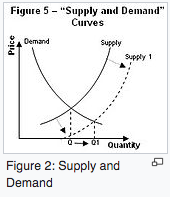

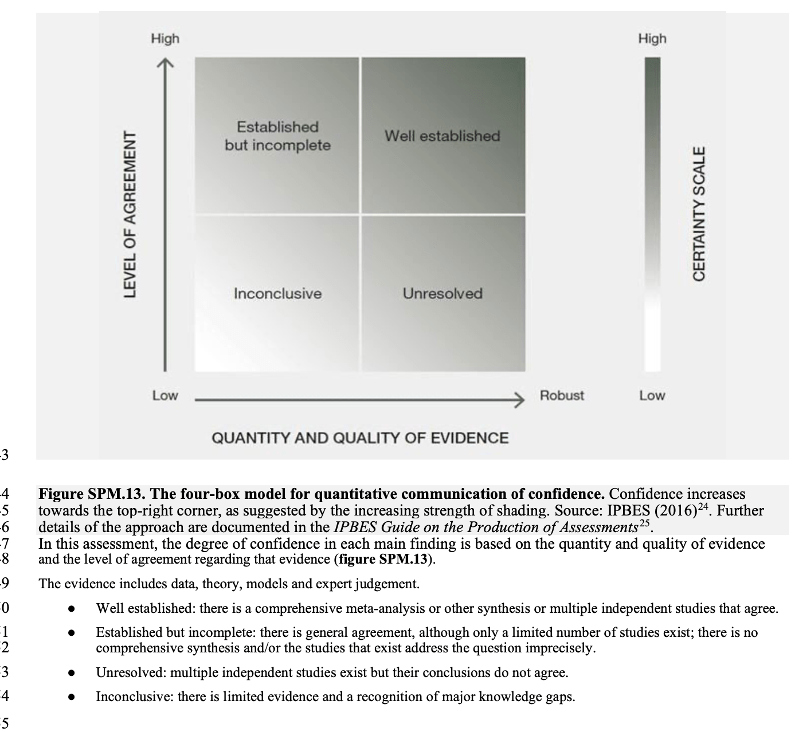

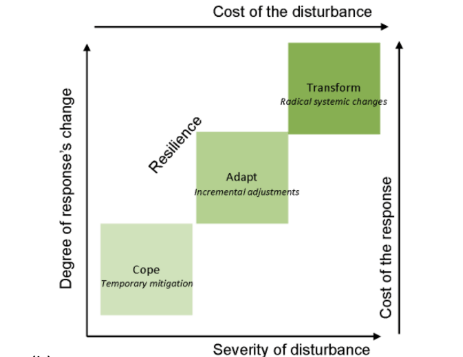
 WHEN COMPLEX IS AS SIMPLE AS IT GETS